Choosing between FANUC vs. Yaskawa can be tough. FANUC is known for its precision in large-scale operations, while Yaskawa excels in speed and flexibility. But, for small and medium-sized businesses, Standard Bots offers a more affordable and easy-to-use solution.
In this guide, we’ll explore:
- How FANUC’s precision compares to Yaskawa’s speed
- Strengths and weaknesses of each brand
- Why Standard Bots might be the better fit for SMEs
Let’s start with the basics first.
FANUC vs. Yaskawa vs. Standard Bots: Key differences
When it comes to large-scale industrial automation, FANUC and Yaskawa both have made a name for themselves. Then there’s Standard Bots, which is an up-and-coming new option to consider.
Here's a closer look at each:
FANUC: Good for massive companies
FANUC is a global behemoth and a leader in CNC controls and industrial automation, with a history dating back to the early 1950s.
They’re well-established due to their high-precision robotic systems, which are often common in industries like automotive manufacturing and electronics.
Pros:
- Ol’ reliable: Known for durability and long-term performance.
- Huge product line: Offers solutions across many industries.
Cons:
- Sticker shock: FANUC’s systems can be pretty expensive, making them harder to sell for small and mid-sized businesses.
- Technical complexity: You’ll need a team of experts to manage these systems effectively. And those come at a premium.
The bottom line: If you’re running a large-scale operation with complex needs, FANUC may be a good choice. However, for smaller businesses, the high costs and technical demands might be too much to handle.
Yaskawa: Good for adaptability
Yaskawa has been a major player in the industrial automation space for over 100 years.
Their robots are extremely versatile and adaptable, especially in industries that need fast, high-speed operations like electronics and packaging.
Pros:
- Yoga-teacher flexible: Yaskawa robots adapt well across industries with efficient solutions.
- High-speed automation: They’re great in environments where speed is essential.
Cons:
- Not cheap: Like FANUC, Yaskawa’s advanced systems come with a walloping price tag.
- Need tech know-how: Complex setups need trained professionals.
The bottom line: Yaskawa is a decent choice if you’re looking for adaptable, high-speed solutions. However, smaller companies or those with limited technical teams may find that the price of implementation is too high.
Standard Bots: Best budget-friendly option
Standard Bots takes a different approach by focusing on affordability and accessibility.
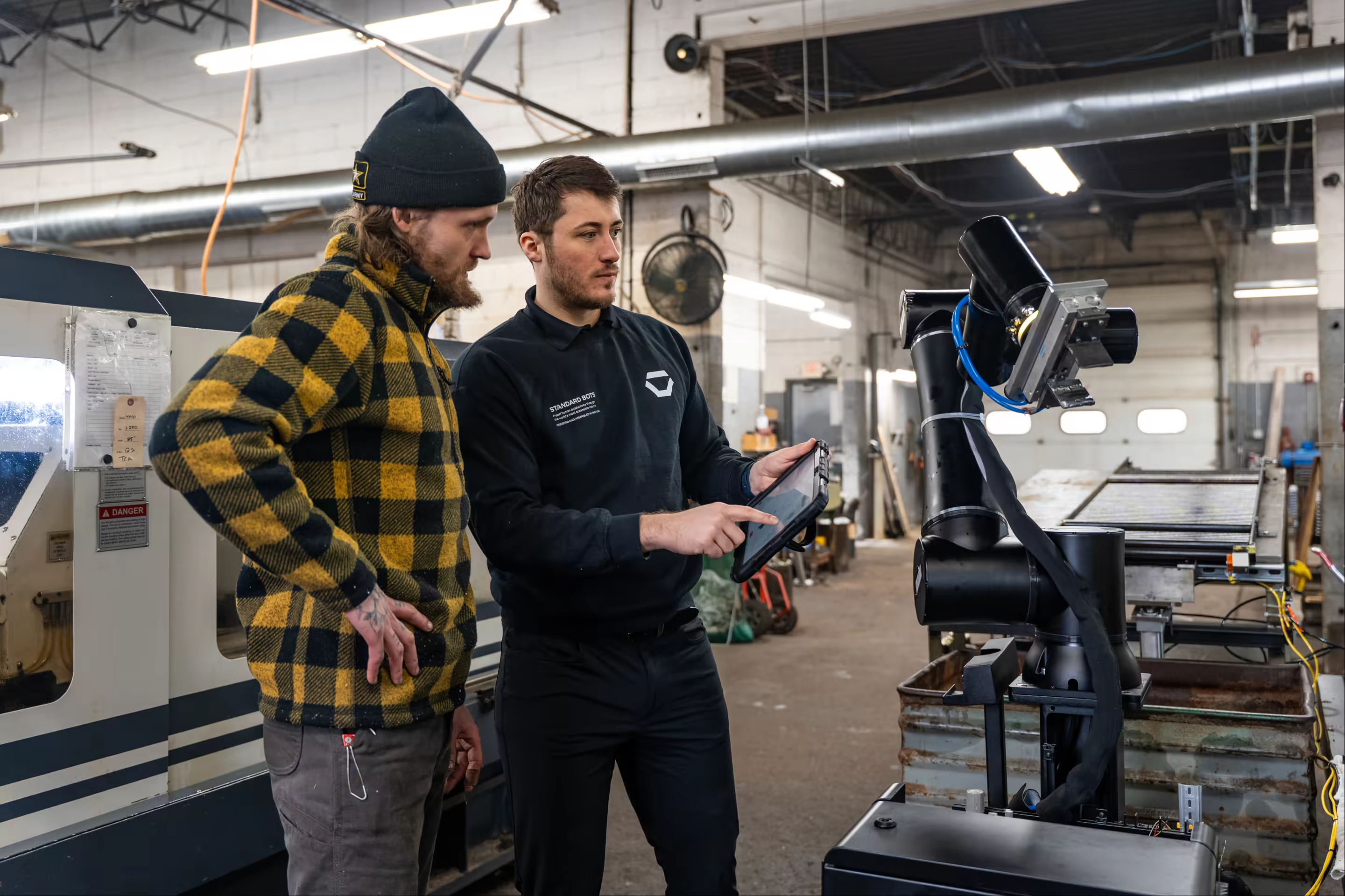
Their robotics solution, RO1, is meant to be accessible for small and medium-sized enterprises (SMEs) that want to automate without the complexity or high costs of brands like FANUC or Yaskawa.
Pros:
- Easy on the wallet: RO1 is priced much lower than competitors, making automation accessible even for smaller budgets.
- User-friendly: Setup is quick and easy, with no-code and pro-code programming options that make it approachable for non-experts.
- Going the extra mile: Standard Bots offers extensive support and training to ensure smooth integration.
Cons:
- Less suited for mass-scale ops: While versatile, RO1 may not offer all the advanced features. Limited advanced features include large-scale automation.
The bottom line: Standard Bots is an ideal fit for businesses seeking an easy-to-implement solution without the high costs. If your focus is on flexibility, affordability, and ease of use, Standard Bots is where it’s at.
Yaskawa vs. FANUC vs. Standard Bots: Which is better for you?
Let’s break it down by the most important factors:
- How much can you spend? If you’re looking for the most affordable option, Standard Bots is the clear winner. Both FANUC and Yaskawa tend to be way, way pricier.
- How easy are they to use? With Standard Bots, you can get your system up and running without a team of engineers. FANUC and Yaskawa require much more technical expertise to get going.
- Are they flexible? Yaskawa is pretty adaptable, but Standard Bots has all the flexibility most businesses need at a fraction of the cost.
- How’s their support? Standard Bots offers accessible and ongoing support and training, making it easy for businesses without a dedicated technical team to hit the ground running.
Summing up
When it comes to choosing between FANUC vs. Yaskawa vs. Standard Bots, the right answer depends on your business’s size and needs.
Let’s recap:
- FANUC is good for huge enterprises that need precision and reliability in complex, high-demand environments.
- Yaskawa gives you great flexibility and speed — great for industries that need adaptable automation solutions.
- Standard Bots provides an affordable, easy-to-implement option for businesses of all sizes, particularly SMEs that want to get started with automation without a steep learning curve or skyrocketing costs.
Next steps
Are you looking for an affordable robot solution that’s easy to integrate? RO1 by Standard Bots is the perfect six-axis cobot arm for businesses looking to automate quickly and efficiently.
- Budget-conscious: RO1 won’t strain your finances, offering high-end performance at half the price of similar robots.
- Fast & strong: With an 18 kg payload capacity and high operational speed, RO1 increases efficiency in your processes.
- Easy to use: RO1 is powered by AI comparable to GPT-4 and features a no-code interface that makes programming a breeze.
- Safety-minded: Built with advanced sensors and machine vision, RO1 works safely alongside your team and its built-in collision detection.
Ready to see what RO1 can do for your business? Get in touch with Standard Bots today and try it risk-free for 30 days, and we’ll help you get set up.